
We rarely consider building fixtures and equipment to be among our essential needs. The main reason for this lack of attention is that we usually do not think about them until a problem occurs. When a problem arises in a building, solving it can sometimes become more urgent than even having a meal. A leaking ceiling, a clogged drainage system, or a bathroom where water accumulates can become a serious threat to our living environment.
We always try to choose the best quality when purchasing products. However, there are certain products for which the cost of choosing an unsuitable or low-quality option can be much higher than purchasing a high-quality product from the beginning. Building equipment is one such category. A floor drain is an essential building fixture that is installed during the construction process, making its quality, durability, and service life particularly important.
A floor drain is generally a drainage opening installed in the floor of a building. Its primary function is to collect water and direct it into the wastewater drainage pipe. However, it also serves other purposes. One of the most important is filtration, which helps prevent debris such as hair, tissues, and other waste from entering the drainage pipe and causing blockages. A floor drain also plays an important role in the appearance of the floor and the overall architectural design of a building.

Floor drains are generally made of metal or plastic. Among metal floor drains, cast iron and stainless steel are among the most commonly used options. Stainless steel floor drains offer higher quality compared with many other types because they are manufactured from 304 and 316 stainless steel. Their key characteristics include a long service life, long-term resistance to pressure, an elegant appearance, and other practical advantages.
Although floor drains can differ in terms of material, their basic design can be similar. Square floor drains have equal length and width, allowing water to enter evenly from the different sides of the drain. The water collects at a single point, known as the outlet, and is then directed toward the wastewater drainage pipe. Square floor drains are also commonly referred to as point drains.
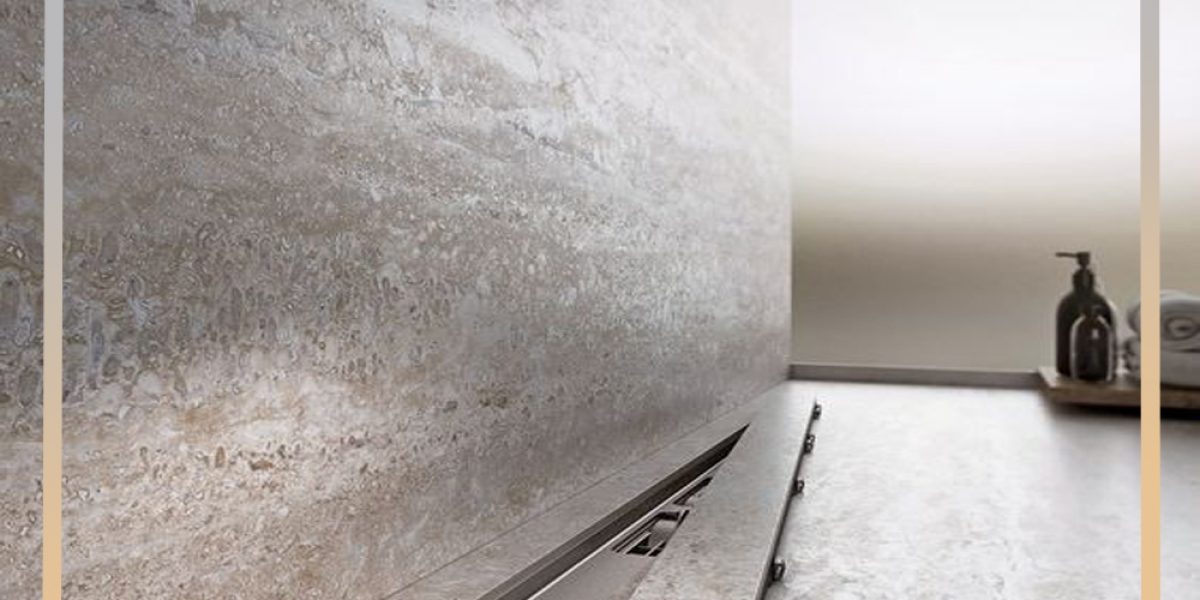
This design has recently attracted increasing attention from users. The rectangular shape of a linear drain plays an important role in both its appearance and its water inlet and drainage capacity. Unlike square drains, where water collects at a single point, linear drains collect and discharge water along their length. As a result, they offer a higher drainage capacity.Linear drains are suitable for larger spaces or areas that require a higher volume of water drainage, such as swimming pools. These drains are generally manufactured in lengths ranging from 20 to 120 cm with a fixed width. Depending on the sheet thickness, the width is typically 7 or 7.5 cm.

Ceramic- or stone-inset floor drains are designed with a cover that provides a dedicated space for installing ceramic tiles or stone. Once the ceramic tile is installed inside the drain frame, the drain blends into the surrounding floor surface, creating a concealed appearance. For this reason, ceramic-inset floor drains are also known as hidden floor drains.
The frameless design, meaning a design without a visible frame, is another characteristic that complements the minimalist appearance of stainless-steel floor drains and contributes to their concealed lo
Quality: The cost of a high-quality product becomes much less significant when you consider that you may need it for more than ten years and that replacing a low-quality product can cost considerably more. Therefore, it is better to pay for quality once and choose a durable product with a long service life
Appearance: Hidden floor drains are an excellent option for minimalist designs. They are designed to remain as unobtrusive as possible, making them suitable for maintaining a clean and modern appearance in homes or workplaces over the long term.