
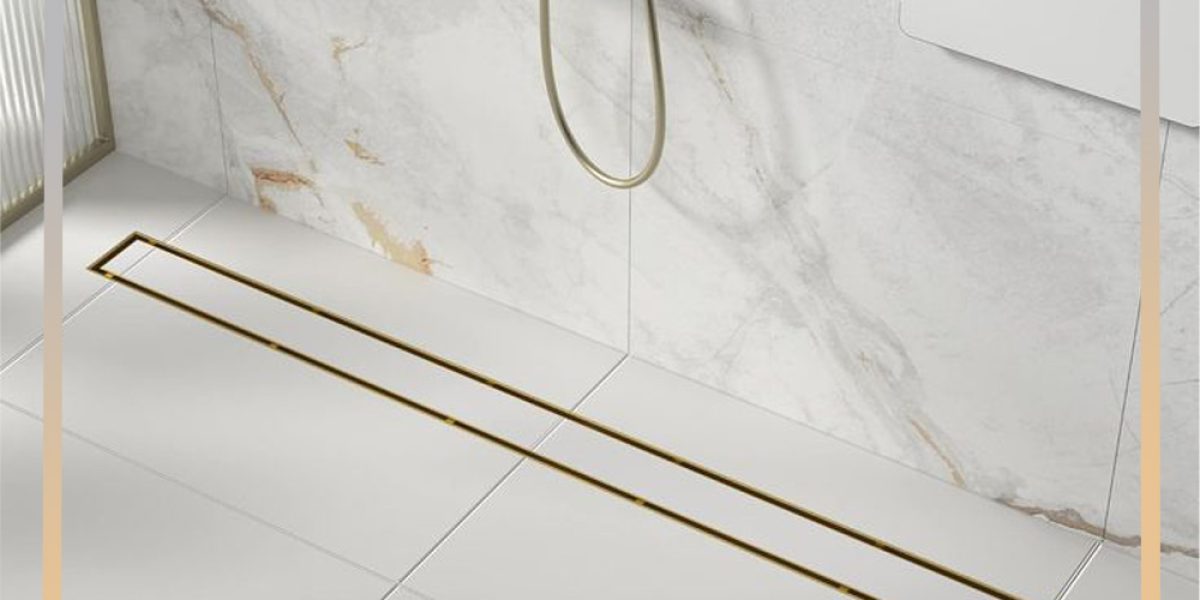
As its name suggests, a floor drain is a sanitary and plumbing fixture installed in the floor. It serves as a connection between the drainage system and the building floor, playing an essential role in bathrooms, kitchens, and all areas where water drainage is required.
A floor drain serves as both a drainage outlet and a filter. In addition to directing water to the drain or sewage pipes, it prevents debris from entering the pipes and helps prevent drainage system blockages.
In the past, plastic floor drains were among the first and only types of floor drains available on the market. Today, however, there is a wide variety of floor drains in different materials and designs, one of the most practical options being stainless steel floor drains.
Stilo Industrial Group offers high-quality stainless steel floor drains in standard designs and sizes, as well as customized options based on your preferred design, dimensions, and specifications.
Stainless steel offers high resistance to moisture, rust, and corrosion caused by cleaning agents. It also has excellent resistance to impact and high pressure, which helps extend the service life of stainless steel floor drains, particularly those made from 304 and 316 stainless steel. It is also a suitable choice for areas exposed to direct sunlight, as plastic floor drains may lose their strength and undergo color changes with prolonged exposure to sunlight.
Today, stainless steel floor drains, available in linear and square designs, have attracted the attention of interior designers due to their minimalist, modern, and concealed appearance. Frameless design is one of the defining features of modern stainless steel floor drains, making the boundary between the building floor and the drain as inconspicuous as possible. Today, the linear ceramic-insert floor drain is one of the most popular models in luxury buildings.
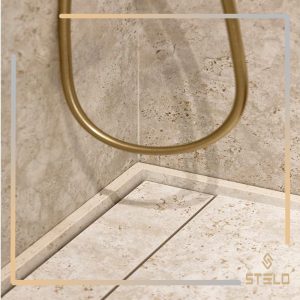
These floor drains are also available with oven-baked powder coating technology in addition to the standard chrome (stainless steel) finish, including gold, black, and white. If you have a preferred color, a custom finish can also be provided upon request.

Ceramic-insert and stone-insert floor drains are designed for dual use. A cut piece of ceramic tile or stone can be placed inside the cover, allowing the drain to be used as a ceramic-insert or stone-insert floor drain. Alternatively, the cover can be flipped over and placed on the drain, revealing a Model 1000 grid design.

Linear floor drains can handle and drain a greater volume of water because they have a larger drainage surface area. Unlike square floor drains, where water collects at a single point and flows downward (point drain), water is collected along the length of a linear drain, allowing a greater volume of water to enter the drain and be discharged more efficiently.
Metals are generally 100% recyclable materials and are therefore considered environmentally friendly.
The rectangular linear floor drain is available in lengths ranging from 20 cm to 120 cm. Depending on the thickness of the stainless steel, it is also available in widths of 7 cm and 7.5 cm. Due to their larger dimensions, these floor drains are an excellent choice for larger spaces. Their wide drainage surface also increases the amount of water that can enter the drain and improves water discharge.
Linear floor drains are available in three main styles: stone-insert, grid designs in various patterns, and ceramic- or tile-insert models. Today, linear floor drains are considered one of the latest options for modern interior design.
The square design of a floor drain allows water to be evenly directed into the drain from all sides of its surface. Due to their compact size, square floor drains are an excellent choice for smaller bathrooms and restrooms.
Like linear floor drains, square floor drains are available in three styles: stone-insert, ceramic-insert, and grid models.
Considering the needs of users, Stilo Industrial Group manufactures and supplies square floor drains in standard sizes of 10 × 10, 12 × 12, 15 × 15, and 20 × 20 cm. These floor drains are also manufactured using stainless steel sheets with thicknesses of 1 mm and 1.5 mm.
They are essentially the same as square and linear floor drains, with the difference being that a piece of ceramic tile is placed in the center, while the gaps around it are used for water drainage. The ceramic-insert floor drain creates a stylish and luxurious appearance by seamlessly blending with the surrounding floor, which is why it is also known as a concealed floor drain.
Stone-insert floor drains are installed in the same way as ceramic-insert floor drains and are suitable for buildings with stone flooring. The main difference between stone-insert and ceramic-insert floor drains is their height.
Since stone is thicker than ceramic tile and requires sufficient space to fit properly within the drain frame, stone-insert floor drains are manufactured with greater depth and height. As a result, they have higher manufacturing costs than ceramic-insert floor drains, which consequently increases their purchase price.

Stainless steel grid floor drains are also manufactured and supplied in both square and linear designs. The cover of these drains features a grid pattern and is available in various designs and shapes, such as Models 1000, 1001, 1002, and more.
Model 1000 is a dual-purpose floor drain, with the other configuration being a ceramic-insert floor drain. Due to its grid design, this type of drain allows water to flow more efficiently from the floor surface into the drain.
Your preferred design or pattern can also be produced as a custom order.
This floor drain is designed and manufactured by Stilo Group’s specialists according to the dimensions and specifications requested by the customer. Customizations may include the length, width, depth, outlet center-to-center dimension (axis), slope adjustment, desired color, or preferred design, such as triangular, L-shaped, and other custom models.
The drain axis refers to the distance from the center of the drain outlet opening to the edges of the drain. The outlet axis can be adjusted to suit the installation conditions. If there are restrictions regarding the location of the drainage pipes, the outlet position can be modified and specified according to the project requirements and based on the installation drawing.
guide to install floor drain
4. Positioning the floor drain: All components and parts of the floor drain should be placed and positioned in the designated location.
7. Complete waterproofing of the floor drain: Make sure that water cannot penetrate beneath the floor. Therefore, the area surrounding the floor drain must be properly waterproofed.