
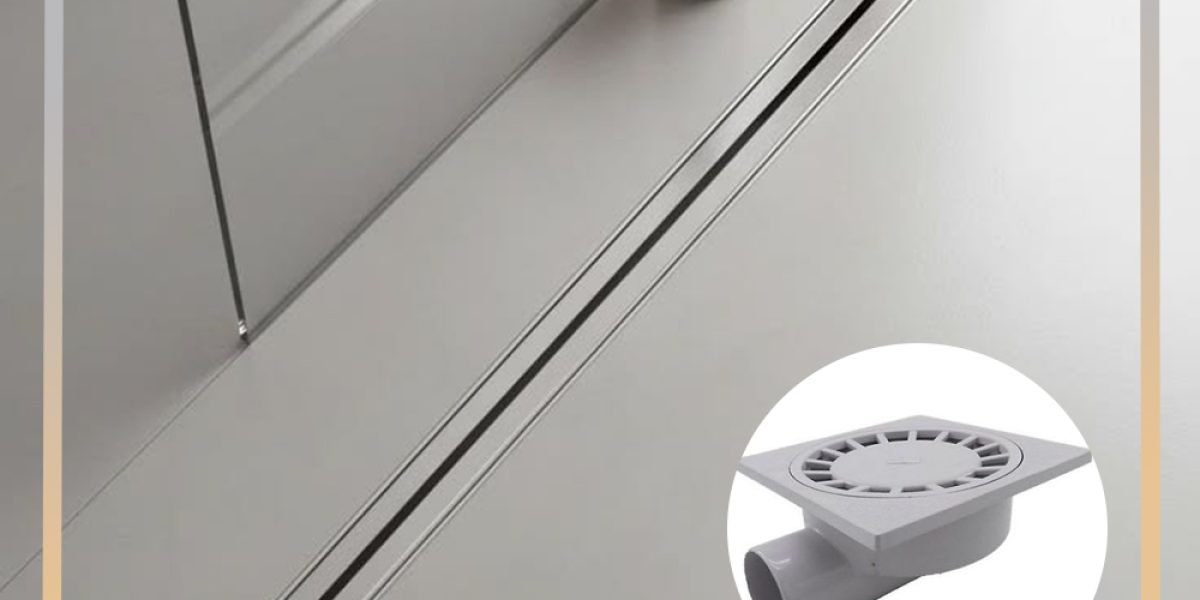
It can be clearly stated that plastic floor drains are of lower quality compared to stainless steel floor drains; therefore, they are not considered luxury floor drains. Plastic floor drains lose their durability when exposed to direct sunlight, and their color tends to turn yellow,but
stainless steel floor drains are considered among the most durable and highest-quality floor drains.
Durability and a long service life are the superior characteristics of stainless steel floor drains. A floor drain is used before the flooring process in places that require water drainage, such as bathrooms, toilets, laboratories, and swimming pools… Therefore, it can be said that choosing a suitable floor drain that is resistant to rust, corrosion, high pressure, and scratches can be effective in reducing your home maintenance costs.
Stainless steel floor drains are produced in square and linear models. Floor drains made of 304 and 316 stainless steel with specified length, width, and depth are available as standard floor drains, ready and available for delivery. However, if a different size, shape, design, or desired color is required, it can be custom-made.
1.Quality: The most important part of choosing a floor drain is its quality. As mentioned, it is important that you do not have to demolish the building floor to replace the floor drain, redo the floor slope and waterproofing, and…
Therefore, choose a durable, rust-resistant, and resistant material from the beginning. Also, make sure that the floor drain has accurate dimensions suitable for your needs.
Water Intake and Drainage Capacity: Large areas with a higher volume of incoming water, such as swimming pools, or places that have multiple water faucets, naturally require larger floor drains for water discharge and drainage. Small square floor drains with point outlets are generally not suitable for handling this volume of water intake and transfer, so linear floor drains or large-sized square floor drains are a more suitable choice.
3.Appearance and Design: As mentioned, choosing a floor drain is a choice for several years of your life. Therefore, in addition to quality, it is important to choose a floor drain that matches the interior design of the building. Our group’s recommendation to you is a stainless steel tile-insert floor drain, which has a concealed and luxurious appearance, provided that the flooring is made of ceramic.

1.Floor Slope: The floor slope must be adjusted with high precision because directing water toward the floor drain is the most important role of the floor in water drainage.